Start with the jobs people want to do
A tool library works best when its collection reflects local needs rather than whatever happens to arrive as a donation. Ask prospective borrowers what they would use for home repairs, gardening, crafts, or community projects. Also ask where they could collect and return items. A shelf in a shared space with dependable opening hours may be more useful than a larger collection that is difficult to access.
Begin with a pilot collection that volunteers can inspect, store, and explain. A neighborhood focused on gardens might start with spades, pruning tools, and wheelbarrows; another might find that hand tools and measuring equipment get more use. This is a planning example, not a shopping list: storage, staff capacity, and borrower experience should shape the first choices. Decide in advance what the library will not accept, especially items it cannot safely check or maintain.
Build an inventory people can trust
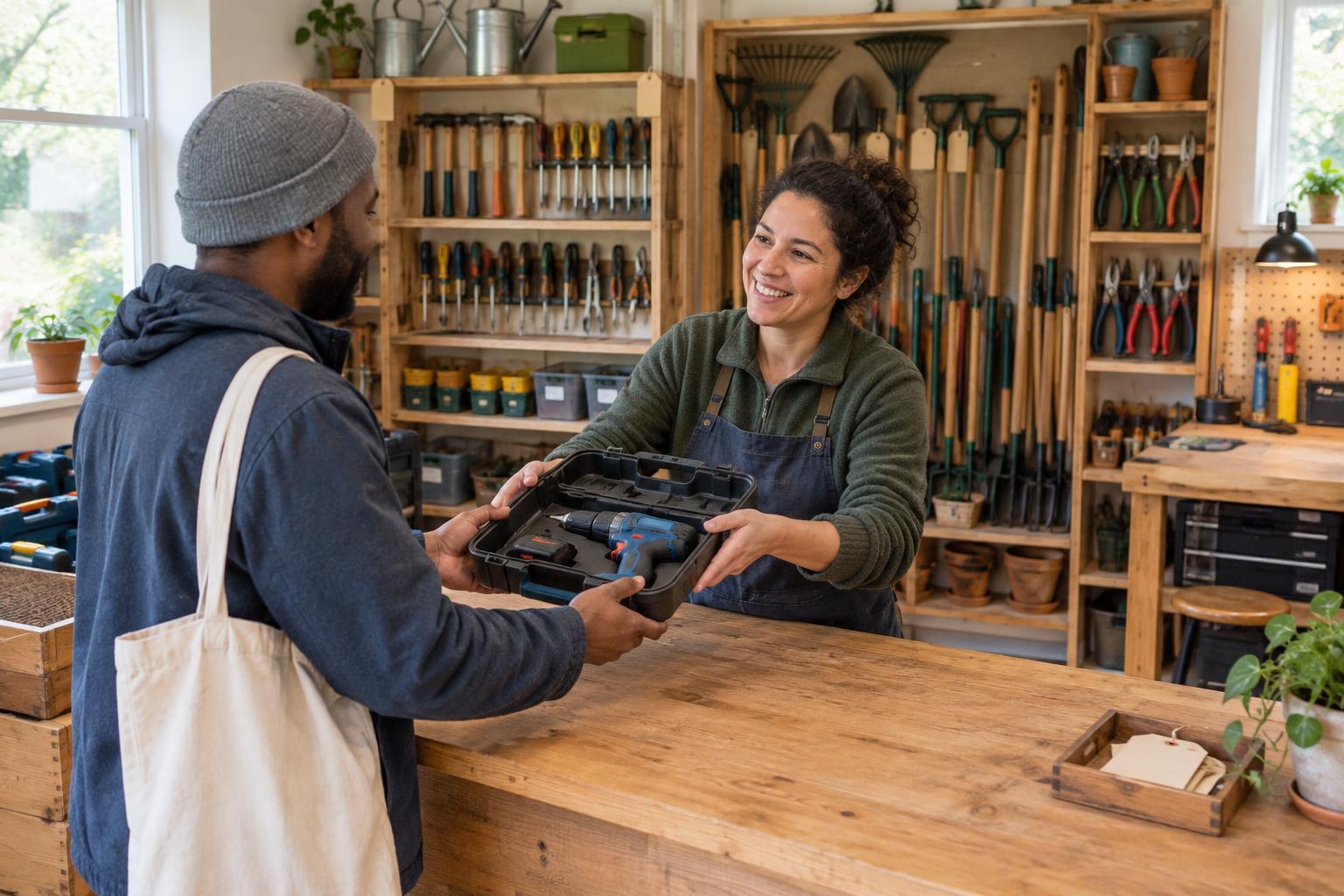
Give every item a unique number and record its name, location, condition, included parts, and any instructions. A simple spreadsheet or shared catalog can work for a small pilot. Label removable parts, such as batteries or attachments, so staff can check that a kit is complete on return. Photographing the contents of a kit can make that check easier without requiring a complicated system.
Before adding an item, inspect it and consider whether borrowers can transport and use it as intended. Set aside donations with missing guards, damaged cords, or uncertain operating instructions until someone qualified to assess them can do so. A free item still creates work if it needs repairs, replacement parts, or more storage than the library can provide. Review the catalog periodically: an item that is rarely borrowed may still be valuable, but it should earn its space and upkeep.
Make lending rules short and visible
Write rules around the questions a borrower will actually have: Who can join? How long can an item be kept? Can it be renewed? What should someone do if it breaks or cannot be returned on time? Put those answers where people sign up and where they check out tools. A brief orientation at the first loan can help borrowers find instructions, identify all the parts, and understand how to report a problem.
Keep the return process predictable. Record the borrower, item number, checkout date, and expected return date; confirm the item’s condition when it comes back. If you use reminders, collect only the contact information needed to send them and decide who can access that information. Clear, respectful follow-up is usually more helpful than rules so strict that people hesitate to report damage. Any deposits or charges should be easy to understand and considered alongside the library’s goal of widening access.
Treat upkeep as part of every loan
Maintenance is not a task to save for an annual cleanup. Establish a quick check at checkout and return, plus a schedule for cleaning, testing, and replacing worn parts where appropriate. Mark items that need attention as unavailable in the catalog so they cannot be lent by mistake. Keep a log of recurring faults and repairs; it helps volunteers see whether an item remains dependable or should be retired.
Make it easy for borrowers to report trouble without having to diagnose it. A note such as “the handle felt loose” gives the library a starting point. Store tools according to their instructions and keep accessories together. Assign responsibility for maintenance decisions rather than assuming any volunteer on duty will handle them. For equipment that requires specialist inspection or training, choose an appropriate process before offering it for loan.
Learn from a small pilot before expanding
Imagine a library opening with a modest set of gardening and household tools at a community space. After several weeks, volunteers notice that a popular kit often returns without one attachment, while a bulky item is seldom borrowed. They add a parts checklist to the first kit and ask borrowers whether the bulky item’s pickup arrangements are the obstacle. Those small changes teach the group more than buying a larger collection immediately would.
Invite feedback from people who have not borrowed, too. Limited opening hours, unclear instructions, or a difficult journey may matter more than the range of tools. Review what was borrowed, what needed repair, and how much volunteer time each loan required. Expand only when the checkout routine, storage, and upkeep can support it. The aim is not the biggest inventory: it is a shared resource neighbors can find, use, and return with confidence.