Start with a specific purpose
A skill-swap brings neighbors together to share things they know how to do. One person might explain how to mend a coat; another might help someone practice a language. The most useful starting question is not “What skills can we collect?” but “What would people here enjoy learning or sharing?” A short conversation at an existing gathering can reveal interests without asking residents to fill out a long form.
Keep the first version narrow. You might try a monthly afternoon of short demonstrations in a shared room, or a small group focused on one theme, such as caring for household items. A limited format is easier to explain, host and adjust. It also helps people understand that they are joining an experiment, not signing up for an open-ended obligation.
Make participation possible in more than one way
Not everyone can teach a class or attend at a fixed time. Some residents may be willing to answer a question for ten minutes, bring materials, welcome newcomers or suggest a topic. Treat these as contributions rather than lesser forms of participation. Where possible, offer both scheduled group activities and a way to propose a future session.
Ask what might prevent people from joining before settling on a venue or format. Check whether the space can be reached and used comfortably, whether there is a quiet place to talk, and whether instructions are available without a smartphone. Avoid assuming that confidence with public speaking is the same as having useful knowledge. A participant who prefers to demonstrate a task alongside one other person may be a better fit for a small table than a presentation.
For more ideas about everyday ways people connect and participate, readers can browse Akceptor Living.
Set boundaries before anyone offers help
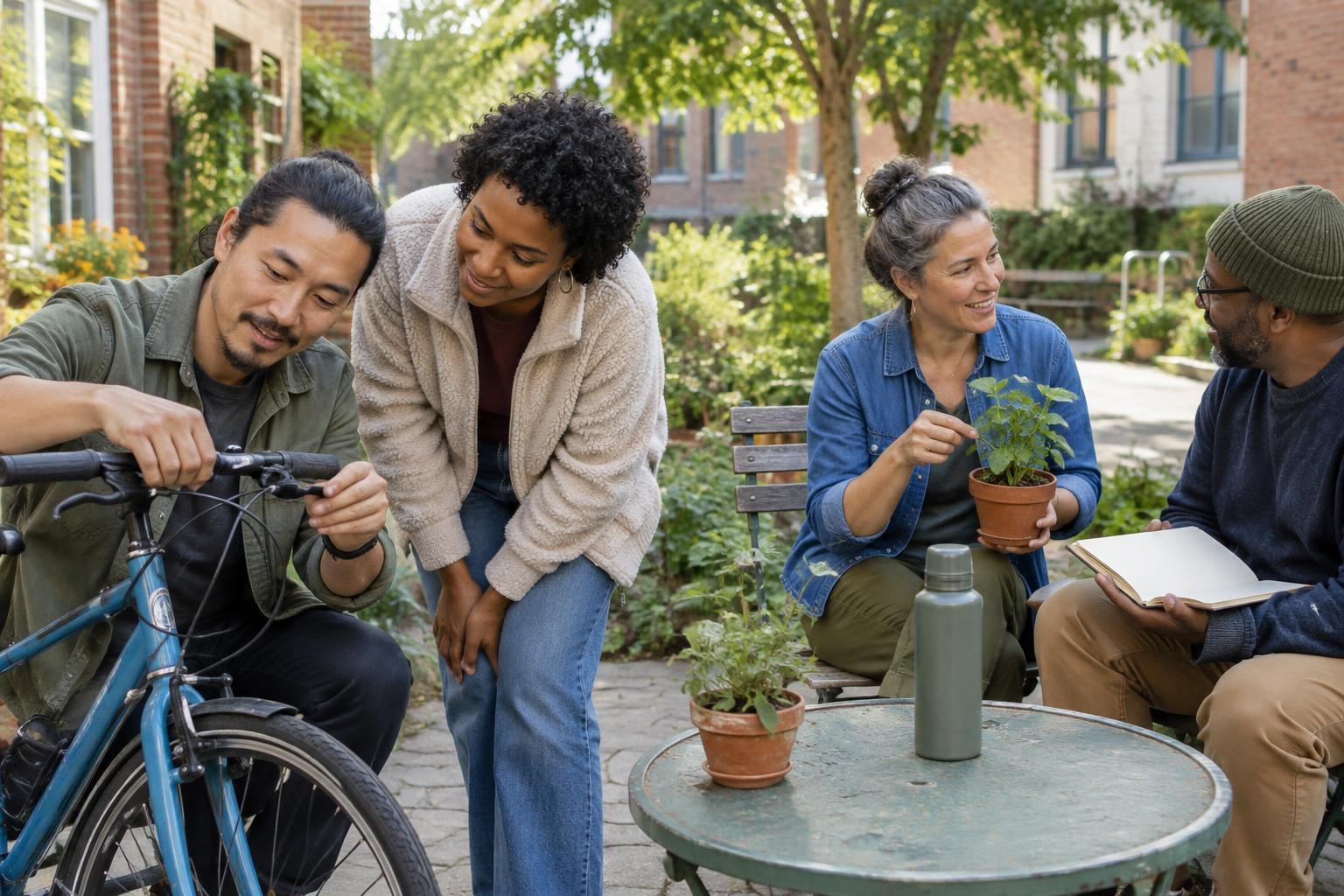
A friendly swap still needs clear expectations. Decide whether sessions are free, whether participants bring their own materials and whether anyone may request a one-to-one meeting. Make it clear that an offer to demonstrate a skill is not a promise to finish another person’s project. A resident showing basic bicycle maintenance, for example, should be able to explain a repair without becoming responsible for every bicycle brought in.
Choose activities that suit the space and the organizers’ capacity. Hands-on tasks may call for equipment, supervision or a different venue; some requests are better directed to a qualified service than handled as a casual exchange. Give hosts a simple way to decline or pause an activity when they are unsure it can be run comfortably. Clear limits protect the welcoming spirit of the swap by reducing awkward surprises.
Keep matching simple and protect people’s choices
You do not need a public directory of residents’ abilities to begin. A noticeboard of upcoming group sessions may be enough. If people want to request or offer one-to-one help, ask what contact details they are comfortable sharing and with whom. Do not post someone’s address, availability or personal circumstances simply because they expressed interest. An organizer can ask permission before introducing two people, and either person should be free to say no.
Avoid turning every exchange into a strict debt. Someone who attends a sewing demonstration may share something months later, help set up chairs next week or simply pass along what they learned. If the group wants a more formal exchange system, discuss its rules openly first: people should understand how it works before their contributions are counted. For further browsing on how people encounter different perspectives, see Culture and Understanding · Akceptor Living.
Learn from the first few sessions
After each gathering, ask a few practical questions: Was the activity easy to find and join? Did the host have what they needed? Was anyone left waiting for help that had not been promised? Invite feedback privately as well as in the room, since not everyone wants to raise a concern in front of neighbors. Record only what helps you improve the next session.
Look for small adjustments rather than a reason to expand immediately. A shorter session, clearer description or second volunteer at the welcome table may do more than a larger schedule. If interest fades, ask whether the format still fits people’s lives; there is no need to keep a program running unchanged for its own sake. A successful skill-swap is one residents can shape, step away from and return to without feeling they owe more than they offered.


