Two ways to organize one growing space
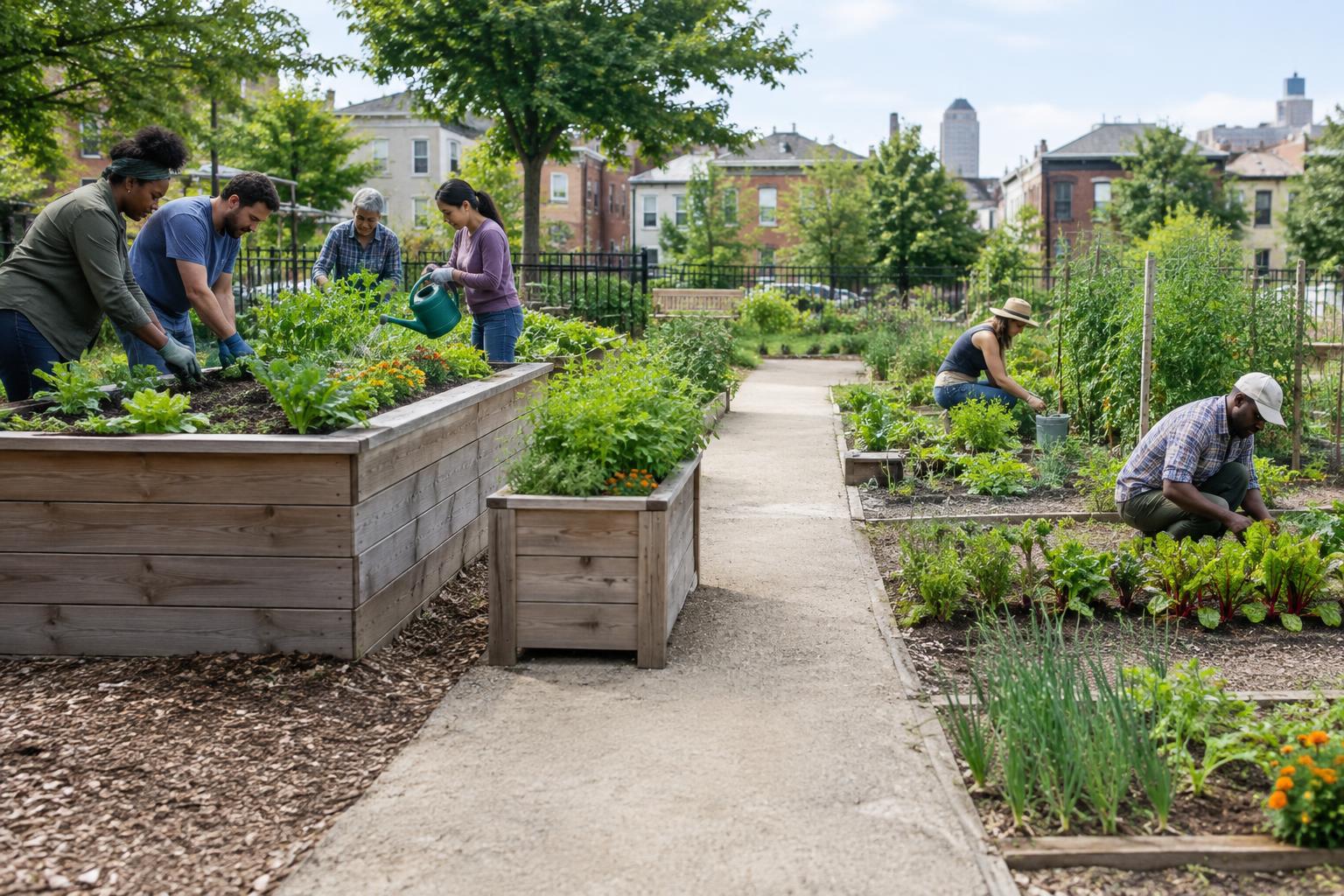
Community gardens bring people together around a place to grow food, flowers or habitat plants. Their layout also shapes how people participate. In a shared plot, members plan and tend growing areas together, then agree on how to use the harvest. In an individual allotment, each gardener has a defined bed or parcel to manage, usually within a larger site that also has shared paths, water and tools. Gardens can combine the two: individual beds might surround a communal herb garden.
The choice is less about which model is best in general than about what neighbors want to do and what they can reliably maintain. A group hoping to run open workdays may value a shared plot. People who want to try their own planting ideas or garden at different times may prefer allotments. Before drawing beds on a map, ask prospective growers what they hope to grow, when they can visit and how much responsibility they want to take on.
What shared plots make possible—and what they require
A shared plot can turn gardening into a collective project. One person might prepare soil while another starts seedlings; someone with limited time can help with watering on a workday. The group can put its space and supplies toward crops it has chosen together. For example, neighbors might decide to grow herbs near a path so visitors can help care for them. Shared work can also make it easier for beginners to learn alongside experienced growers.
That flexibility depends on clear agreements. Who decides what gets planted? How are watering and weeding covered between workdays? When can someone harvest, and how much should they take? Without answers, the same few people may end up doing most of the upkeep, while others feel unsure whether they are welcome to pick anything. A simple task schedule, a visible harvest plan and regular chances to revisit decisions can help. Keep those arrangements light enough that volunteers can actually use them.
What individual allotments offer—and what they can limit
Individual allotments give gardeners room to work at their own pace. A grower can choose plants suited to their interests and learn from the results without needing group approval for every change. A defined bed also makes routine care easier to assign: its gardener knows when it needs water or attention. This can suit people whose schedules make group workdays difficult, provided the site’s access hours work for them.
Allotments still need collective decisions. Members must agree on paths, water use, tool storage, compost and how to handle an untended bed. If there are more interested people than plots, a transparent way to allocate space matters. Rules should explain how someone joins a waiting list, whether a plot can be shared and what happens when a gardener leaves. Individual beds can become socially isolated if there are few reasons to meet, so shared seating, seed swaps or optional workdays can help connect the site.
Make access part of the layout
Neither model is automatically welcoming. Paths need enough room for people to move and work comfortably, and some growers may benefit from raised beds, nearby seating or tools they can use with less strain. Ask participants about barriers rather than assuming one design will suit everyone. Water access, opening times, travel to the site and the cost of supplies can matter as much as bed dimensions. A plan that depends on frequent visits may exclude people who would gladly contribute in other ways.
Consider how a newcomer would understand the garden. In a shared plot, signs can clarify which beds are open for group work and when harvesting is appropriate. In an allotment garden, clear boundaries can prevent accidental picking without making the space feel closed to visitors. Offering small tasks, paired gardening or a shared bed can create an entry point for people who are curious but not ready to manage a whole plot.
Choose a model the group can sustain
Start with the work that will continue after the first planting day: watering, path care, replacing supplies and welcoming new members. If a small group wants to coordinate closely and share harvests, try a modest shared area before expanding. If growers want more autonomy, begin with manageable allotments and make the responsibilities for common areas explicit. Either way, put basic agreements in writing and make them easy to change together as the garden develops.
A mixed layout often gives a group room to adapt. Individual beds can support personal experiments, while a shared plot offers a place to learn and work together. The garden might test its arrangement for one growing season, then ask what felt fair, what went unfinished and who could not participate. Those answers are more useful than treating the original plan as permanent. A community garden succeeds when its space, work and benefits remain understandable—and open to the people it is meant to serve.