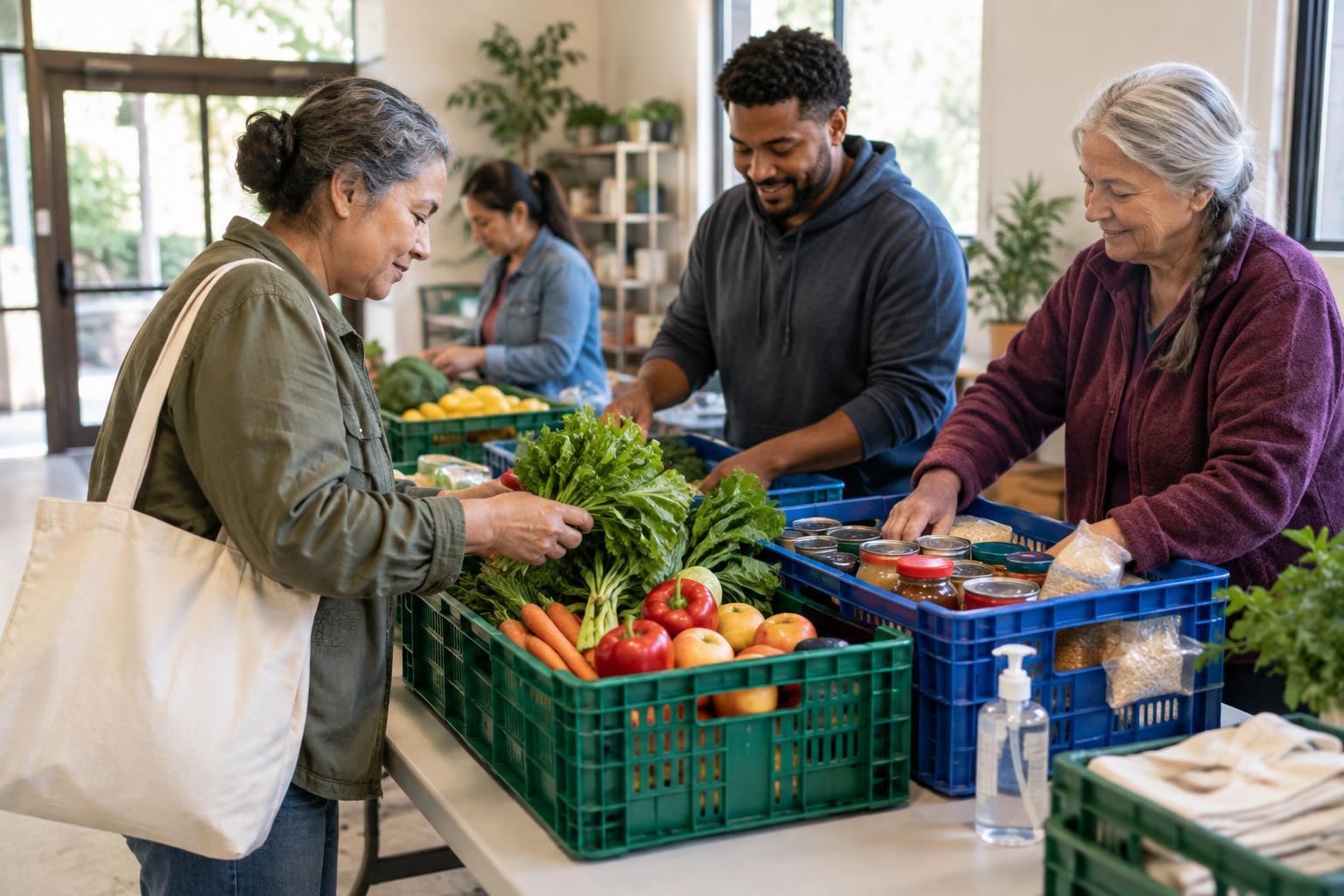
Start with a format your neighbors can sustain
Food sharing can take several forms: a shelf for unopened pantry items, a staffed table at a regular gathering, or a small group that connects people offering surplus food with people who want it. The simplest workable format is often the best place to begin. A shelf needs someone to check it regularly; a staffed table needs dependable shifts; direct matching needs a way to coordinate pickups without exposing anyone’s private information.
Before collecting food, talk with potential participants about location, hours and access. A site that is convenient for organizers may be difficult for someone with limited mobility or an irregular work schedule. If the initiative will use a shared building or public space, get the relevant permission and check applicable local requirements. Agree on who is responsible for the space and what will happen if a volunteer cannot make a shift.
Make food safety rules easy to follow
Write a short list of accepted items and display it wherever people donate. An initial pantry-only program might accept unopened, shelf-stable food in intact packaging with readable labels, while declining opened items, damaged containers and anything that needs refrigeration. Starting with fewer types of food makes it easier to explain the rules and check donations consistently. If the group later wants to share fresh or prepared food, plan the storage, transport, cleaning and staffing that those items require before accepting them.
Ask donors to check packaging and dates, and give volunteers permission to remove anything they cannot confidently identify or handle safely. A date label alone does not answer every safety question; storage conditions and the condition of the package also matter. Keep food off the floor and away from cleaning supplies. Establish a routine for checking the space, discarding unsuitable items and cleaning surfaces. Local food-safety guidance may impose additional requirements, particularly for prepared or temperature-sensitive foods.
Keep ingredient and allergen labels with the food. Do not promise that donated items are allergen-free or suitable for a particular diet unless that can be verified. If someone asks about an uncertain item, a clear “we don’t know” is more useful than a guess.
Build dignity into the way food is offered
A welcoming initiative should not require people to explain why they need food. Use plain signs that say what is available, when it can be collected and whether there are any quantity limits. Avoid labels such as “donors” and “recipients” when neighbors may be both at different times. Make it possible to take food without being photographed or asked to share a personal story.
Fairness also means thinking about who can reach the food first. If supplies disappear quickly, consider modest per-visit limits or a mix of pickup times rather than an informal first-come system that always favors people with flexible schedules. Explain any limits publicly and apply them consistently. Ask participants what is working through an optional, low-pressure feedback channel; do not collect names or circumstances unless they are genuinely needed to run the service.
Give volunteers clear roles and room to say no
A short written plan can prevent confusion. Name a coordinator for the space, a person who maintains the accepted-items list and a way for volunteers to report a problem. Use a simple shift checklist: inspect food, remove unsuitable items, tidy the area and note what needs attention. Keep contact details in a place volunteers can access without posting anyone’s personal number publicly.
Set boundaries for pickups and deliveries. Volunteers should know whether they are expected to enter homes, carry heavy bags or use their own vehicles; none of these tasks should be assumed. Where possible, arrange exchanges in an accessible, agreed-upon place and offer a way to raise concerns. Rotating duties and keeping shifts manageable makes the initiative less dependent on one enthusiastic person.
Pilot, learn and adjust
Try the initiative for a limited period with a manageable number of participants. Keep notes about practical issues: which foods are frequently left behind, whether opening hours work and how often items must be removed. There is no need to record who takes what to learn whether the setup is useful.
At the end of the pilot, review the rules with volunteers and participants. You may find that a different pickup time, clearer signs or a narrower accepted-items list would help more than expanding the program. A reliable, respectful exchange—even a small one—is a stronger foundation than a larger effort that cannot be maintained safely.