Start with a question you can act on
A listening session works best when people know why they have been invited and what will happen afterward. Choose a focused question, such as “What makes it difficult to use the neighborhood park?” rather than “How should we improve the community?” A narrow question leaves room for different perspectives while making the responses easier to use. Decide in advance who will receive the findings and what decisions, if any, the group can influence.
Be candid about the limits of the session. If you are a volunteer group hoping to identify a small project, say so; do not imply that you can commit a city department to repairs. Write a short invitation explaining the topic, location, length, accessibility arrangements and how notes will be used. Invite people through more than one route, such as local gathering places, resident groups and direct conversations, so attendance does not depend entirely on who follows an online channel.
Make it easier for different neighbors to take part
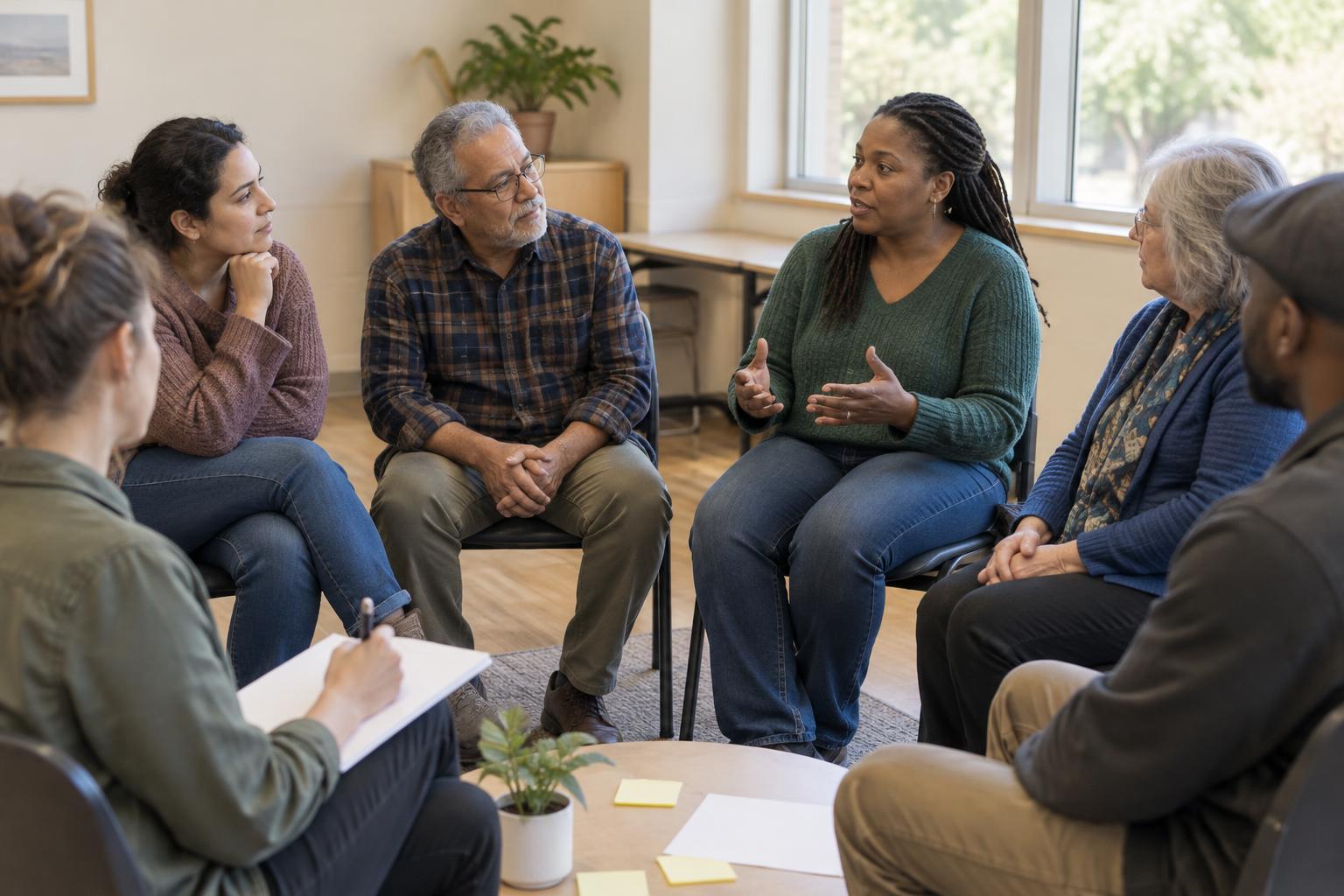
Choose a place people can find and enter comfortably, with seating that allows participants to see and hear one another. Consider transit access, step-free entry, restrooms, lighting and the time of day. Ask invitees what would help them participate rather than assuming one arrangement will work for everyone. If you can offer interpretation, a remote option or a way to submit thoughts in writing, explain how to use it. If you cannot, say that plainly and look for another way to hear from people who cannot attend.
Keep the session manageable. One facilitator can guide the conversation while another person takes notes and watches for requests to speak. Prepare a few open questions: “Where do you encounter this problem?” “Who might experience it differently?” and “What would a useful first change look like?” Avoid asking participants to speak on behalf of everyone who shares their age, background or street.
Listen without turning the meeting into a debate
At the start, explain the purpose, the schedule and how you will record ideas. Set simple ground rules: speak from personal experience, leave space for others and challenge ideas without attacking people. Let participants know whether comments will be attributed by name, summarized anonymously or kept out of the report. Do not promise anonymity if you are collecting names or if a distinctive story could identify its speaker.
Give people a quiet moment to think or write before opening the discussion. Then invite a range of voices without forcing anyone to disclose personal information. The facilitator can ask for an example, check that a comment has been understood and redirect the group when one person dominates. If participants disagree, record the disagreement rather than pushing for an artificial consensus. A session about a park, for instance, might reveal that some neighbors want brighter paths while others worry that lighting could disturb nearby homes. Both concerns belong in the notes.
Turn notes into a fair account
Soon after the session, review the notes with the note-taker while the discussion is still familiar. Group comments into themes, but keep meaningful differences visible. Separate what participants described from what they proposed: “The crossing feels difficult at school pickup time” is a reported experience; “Add a crossing guard” is a suggested response. Mark questions that need checking rather than presenting guesses as facts.
Avoid treating the loudest or most repeated comment as a vote. Attendance is not a representative sample of the neighborhood, and people who could not come may see the issue differently. If you include a quotation, get permission and check whether its context remains clear. Otherwise, paraphrase without details that could expose someone’s private circumstances. A useful summary explains who was invited, how input was gathered, what themes emerged, where views differed and what you still do not know.
Close the loop with a report people can use
Reporting back is part of listening, not an optional extra. Share a short, readable account through the same routes used to invite people, including an offline route where possible. Lead with what you heard, then state what the organizing group will do next, who is responsible and when neighbors can expect an update. If a suggestion is outside your group’s control, explain whether you will pass it to someone who can consider it. Distinguish that action from a promise that the suggestion will be adopted.
Invite corrections: participants may notice that a concern was misunderstood or that an important perspective is missing. Keep a way for non-attendees to respond, too. A modest next step might be a follow-up walk to examine the places people named, followed by another update. The aim is not to produce a flawless account of the whole neighborhood. It is to show that people’s contributions were handled carefully and to make the path from conversation to action visible.