Start with a place to gather, not a plan to impose
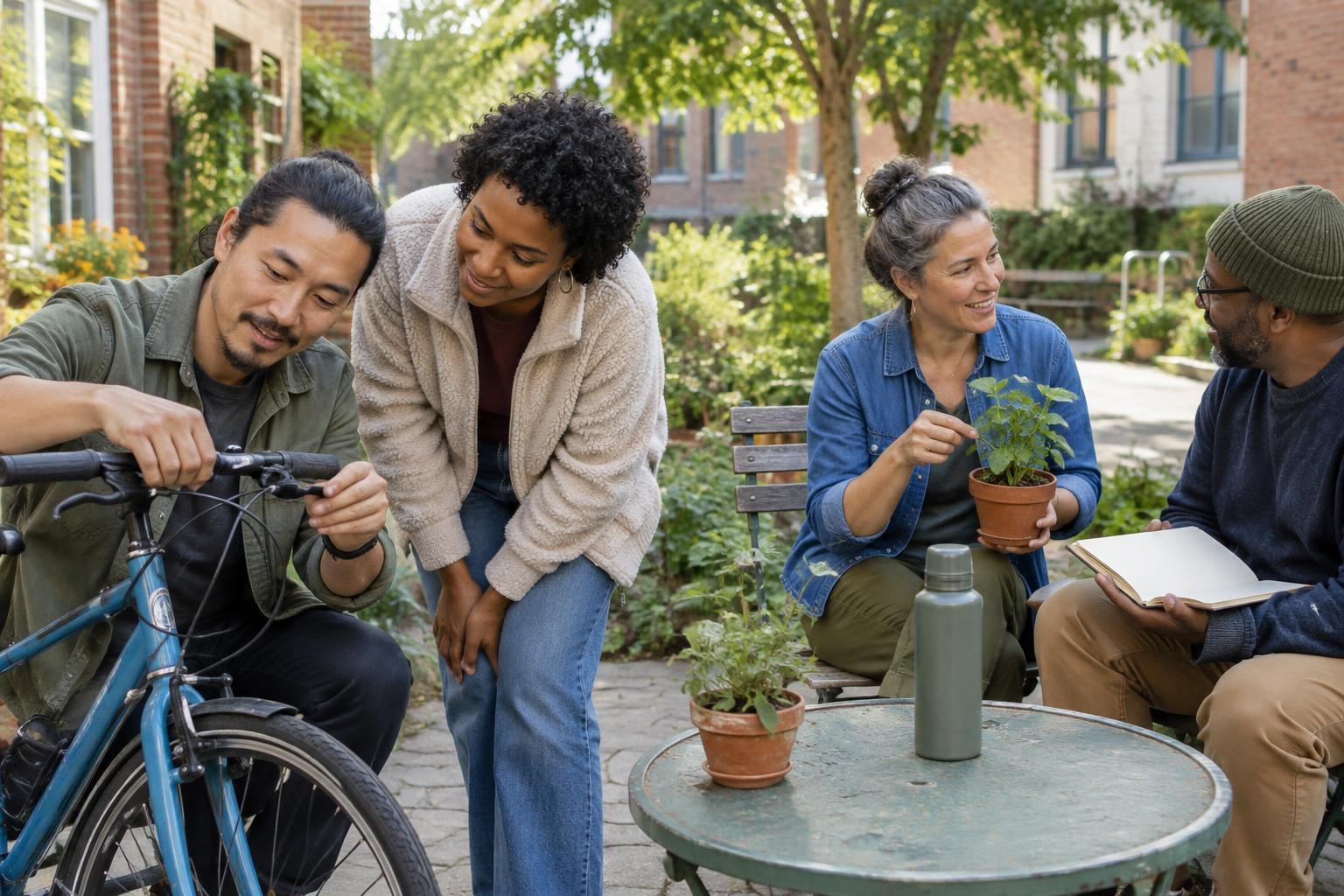
A resident-led project begins with people who live in a community identifying something they want to change. They might organize a neighborhood repair day, map safe walking routes or create a multilingual guide to local services. A library can make that first step easier by offering a familiar place to meet, a table to work around and ways to share information. Its most valuable contribution may be to help people connect without deciding in advance what their project should become.
Staff can invite ideas through a noticeboard, a simple suggestion form or conversations at existing library events. They can then offer a short gathering where residents compare interests and decide whether they want to work together. Questions such as “Who else should be here?” and “What could a small first step look like?” leave room for local knowledge. Not every idea needs to become a formal program; sometimes helping neighbors find one another is enough.
Make participation possible for more residents
An open invitation does not automatically mean everyone can take part. Meeting times, transportation, language, childcare needs and digital access can affect who shows up. Libraries can ask prospective participants what would help them participate and offer options within their capacity: a mix of daytime and evening sessions, clear print and digital notices, or a way to contribute ideas without attending a meeting. Materials should use plain language, and any online tools should be usable on a phone where possible.
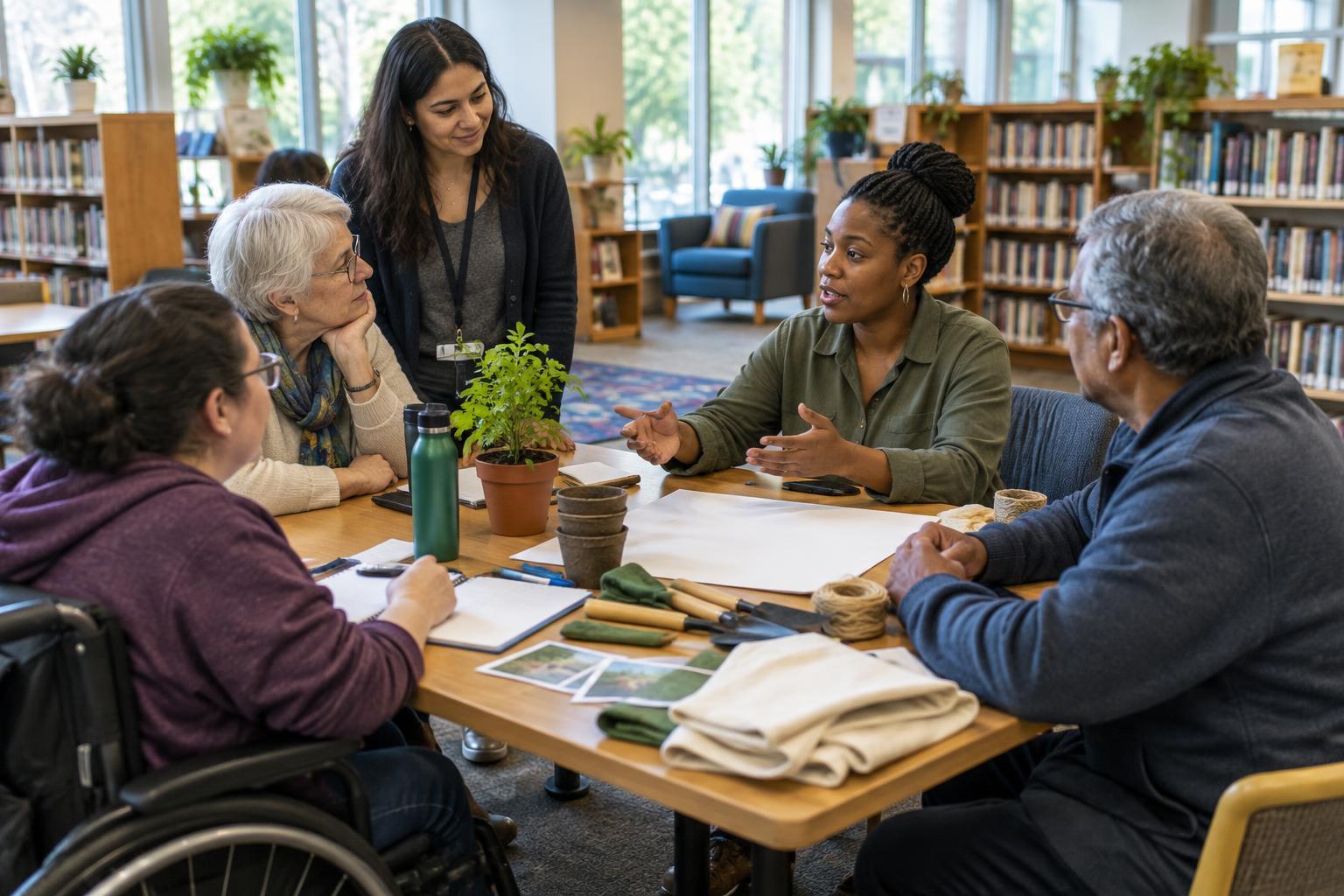
Accessibility also shapes the room itself. Organizers can check whether people can enter and move through the space, hear and follow the discussion, and take breaks when needed. Sharing an agenda ahead of time and providing written ways to comment can help people who prefer not to speak in a group. Residents with different experiences may need different forms of support, so it is better to ask than to assume that one meeting format works for everyone.
Offer tools while keeping decisions with residents
Libraries often have resources that make a modest project easier to start: meeting space, computers, printing, research help and staff who know how to find information. What a particular branch can offer will depend on its budget, policies and workload. A project team might use library computers to draft a walking-route survey, for example, or reserve a room to sort responses. The library can help participants understand available tools without becoming responsible for every task.
Clear roles protect both the project and the library. At the outset, residents and staff can agree on who sets goals, who manages materials, how room bookings work and what the library can reasonably provide. If participants collect stories or contact details, they should decide why that information is needed, ask permission before sharing it and avoid gathering more than the project requires. Written agreements can be brief; their purpose is to prevent confusion, not add unnecessary bureaucracy.
Connect projects to skills and partners
Resident teams may need practical skills more than a large grant or a complex platform. A library could host a workshop on making an accessible flyer, organizing a volunteer schedule or checking whether information is reliable. Participants can also teach one another. Someone who knows a neighborhood well may contribute as much as someone comfortable with spreadsheets; making room for both kinds of knowledge strengthens the work.
Partners can help when a project needs equipment, specialist knowledge or permission to use another space. A library might introduce residents to a community group or relevant local service, while leaving the residents free to choose whether to collaborate. Consider a proposed seed-sharing shelf: residents could define how exchanges work, library staff could explain space limits, and a gardening group could offer advice if invited. The aim is a workable division of effort, not a library-branded project that displaces its organizers.
Keep the first step small and learn from it
A limited trial gives a new group something concrete to discuss. Rather than promising a year of events, residents could host one repair session or test a draft neighborhood guide with a few willing readers. Afterward, they can ask what was useful, who was missing and what took more effort than expected. Feedback need not be elaborate: a short conversation, anonymous comments and a record of decisions may reveal enough to guide the next step.
Some projects will grow; others will pause when volunteers have less time or the original need changes. That is not necessarily a failure. A library can support continuity by keeping approved project materials easy to find, explaining how new residents can join and helping teams hand over tasks. Success is not measured only by the number of events held. It can also mean that residents gained a connection, learned a skill or found a practical way to act together.