Start with the decision, not the dataset
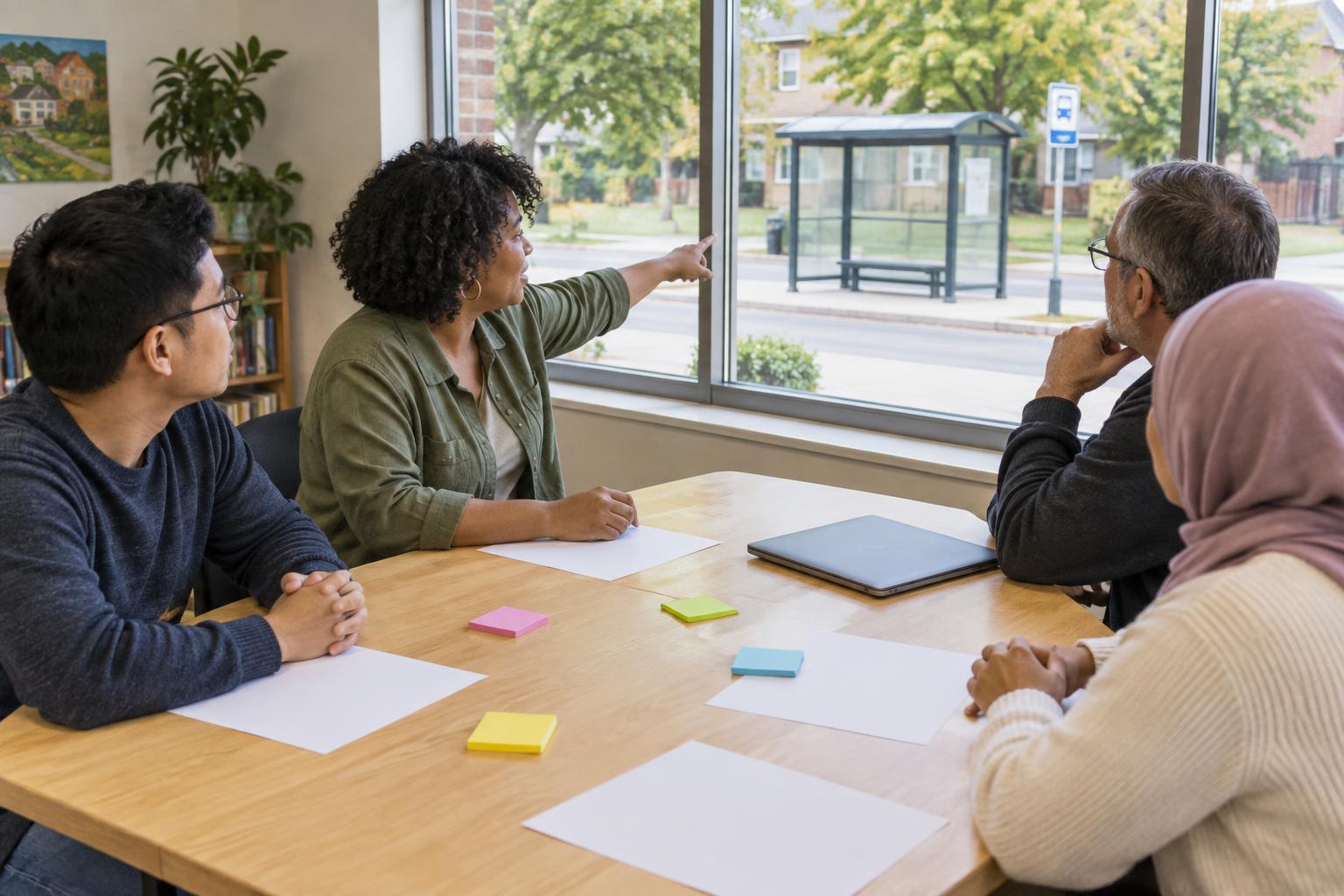
Community groups often collect data because a problem is visible but hard to describe to someone who can act on it. Residents may know that a crossing feels unsafe or that a public space is difficult to use. A useful project turns that concern into a focused question: Which crossing needs attention? At what times is the problem most noticeable? What change could the evidence help a group request or test?
Write down the intended decision before choosing a survey or spreadsheet. If the aim is to ask for a safer crossing, counts of people waiting, observations of traffic conditions, and descriptions of accessibility barriers may be more useful than names or home addresses. Also ask whether existing public information, a short walk-through, or a conversation with affected residents could answer the question without creating a new store of personal data.
Collect less, but listen better
Imagine a neighborhood group exploring why a small park is underused. It could invite residents to share which features make visits difficult, while volunteers record whether paths, seating, lighting, and entrances are usable. This is a hypothetical example, but it illustrates a useful distinction: the group needs evidence about barriers, not a list of every person who encounters them.
For each proposed question, ask, “How will this answer change what we do?” If there is no clear answer, leave the question out. Use broad time ranges instead of exact visit times when precision is unnecessary. Offer an option to skip questions, and avoid collecting contact details in the same form as sensitive responses if follow-up can be managed separately. A short, accessible explanation should tell people who is gathering information, how it will be used, who will see it, and when it will be deleted.
Accessibility affects the quality of the evidence as well as participation. An online-only form may miss people with limited internet access; a meeting-only approach may miss people who cannot attend. Consider more than one way to contribute, such as a plain-language paper form and an accessible digital version. Make clear that declining to participate will not affect anyone’s access to community activities or services.
Plan for small-group privacy
Removing names does not always make community data anonymous. In a small area, a detailed comment combined with an age range, location, or unusual circumstance may identify its author to a neighbor. Free-text responses can carry the same risk even when a form asks for no identifying information. Review what volunteers will collect before the project begins, not just before publication.
Set simple rules for access and storage. Keep raw responses with only the people who need them, use protected accounts rather than shared personal logins, and decide when the raw material will be removed. If volunteers take photographs, avoid recognizable people, homes, or vehicle details unless they are necessary and the people involved understand the use. For public findings, summarize patterns rather than publishing individual records. When very few responses fall into a category, combine categories or leave that breakdown out rather than presenting a potentially recognizable detail.
Let residents shape the questions and the interpretation
A project can be careful with privacy and still draw the wrong conclusion. A low number of reported problems might mean conditions are good, but it might also mean the survey failed to reach people most affected. Before collecting data, invite residents to check whether the questions reflect their experience and whether the proposed methods feel safe and convenient. Give them a way to raise concerns without having to make a public disclosure.
Afterward, share a draft summary with participants or a small community review group. Ask what seems missing and whether any example could reveal someone’s identity. Separate observations from interpretations: “Several respondents described difficulty using the entrance” is narrower than “The entrance prevents everyone from visiting.” Explain who took part, how responses were gathered, and important limits on what the results can show.
Share findings with a clear next step
The most useful output is often a brief account of the question, the method, the main patterns, and a practical request. For the hypothetical park project, that might mean a summary of reported barriers and site observations, followed by a request to review an entrance or test a seating change. The group can share this without releasing raw responses. If more detail is requested, pause to consider whether it is necessary and whether participants were told it might be shared.
Close the loop with the people who contributed. Tell them what was shared, with whom, and what happened next, even if no immediate change followed. Then delete information that has served its purpose according to the plan set at the start. A community data project succeeds not by collecting the most information, but by gathering enough trustworthy evidence to support action while preserving residents’ ability to participate safely.