What participatory budgeting means
Participatory budgeting is a process in which residents help decide how to spend a defined portion of a public budget. Rather than only offering feedback on a decision already made, people propose ideas, help shape feasible projects, and choose among them. The budget might fund improvements to shared spaces, neighborhood services, or other projects permitted by the organization running the process.
The word “participatory” matters as much as “budgeting.” A useful process gives people enough information to make choices and shows how their choices affect spending. It does not mean residents control every part of a local budget. Organizers need to state the amount available, what it can be used for, and which costs or decisions remain outside the process.
How a typical process unfolds
The first step is to set clear ground rules. A council or other public body identifies a pool of money, explains who can take part, and publishes criteria for eligible proposals. Residents then share needs and ideas through meetings, paper forms, online tools, or conversations in familiar community spaces. Providing more than one route to participate helps avoid limiting the process to people who can attend a meeting or use a particular website.
Next, organizers and residents turn broad ideas into proposals that can be assessed. Staff may check costs, permissions, maintenance needs, and whether a project fits the published rules. Participants should be able to see why an idea has changed or cannot proceed. Eligible proposals then go to a vote or another clearly explained community selection process. After choices are made, the responsible body funds the selected projects and reports on their progress.
A small example: choosing improvements for a shared space
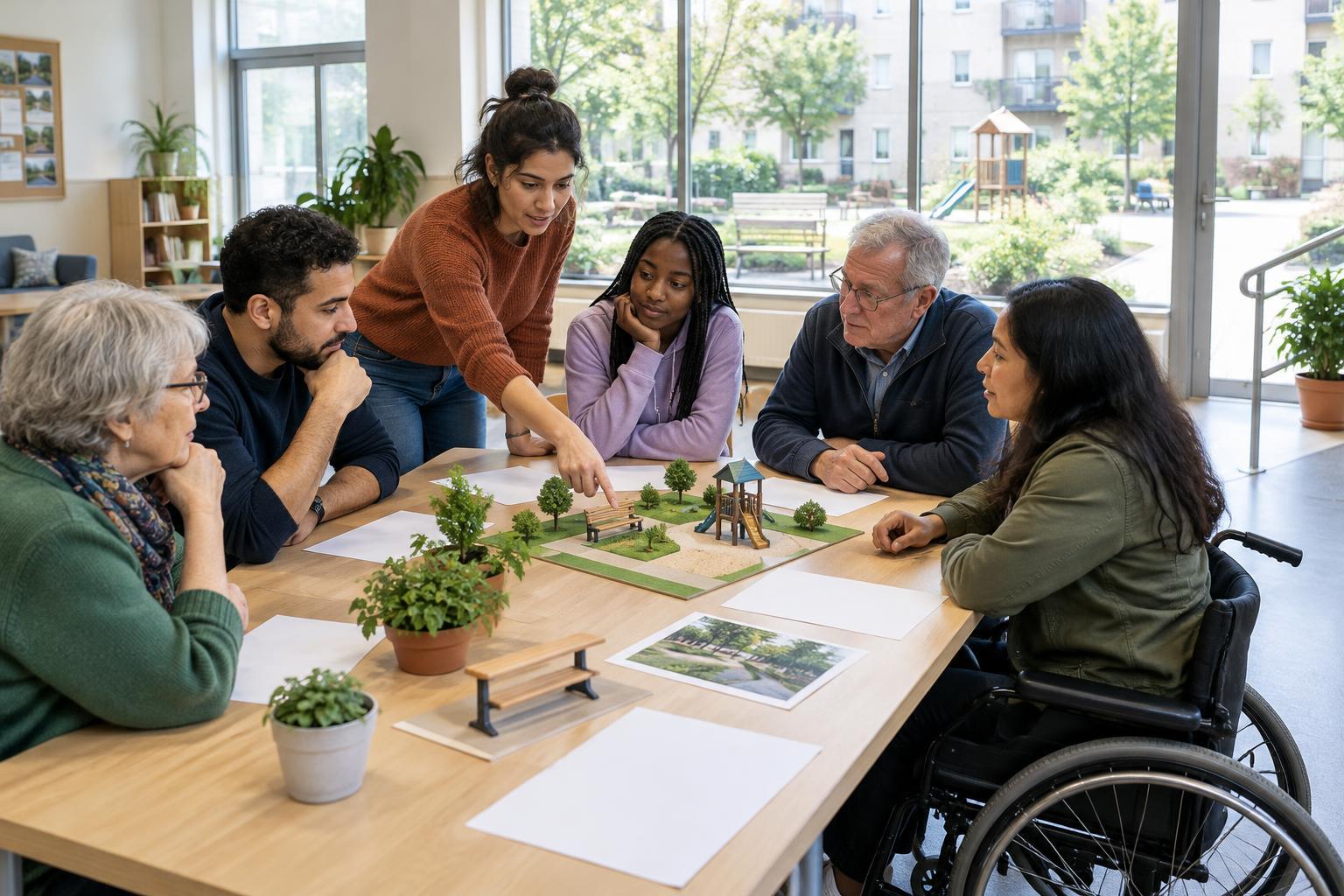
Imagine a neighborhood has a set amount to improve a public square. Residents suggest shade, seating, planting, better lighting, and a drinking fountain. Before any vote, staff estimate what each idea would cost and identify practical constraints. A fountain might require plumbing and ongoing maintenance that the available budget cannot cover. Instead of quietly dropping it, organizers explain the constraint and invite residents to consider a smaller or different proposal.
The final choices might include several modest projects rather than one large one. If seating and planting win, the process does not end when the votes are counted. Residents need to know who will deliver the work, when updates will appear, and how changes to the plan will be explained. This example is hypothetical, but it shows why a credible process connects community preferences with real delivery.
Making participation genuinely open
An open invitation is a start, not a guarantee that everyone can take part. Meetings held at only one time may exclude shift workers or caregivers. An online-only ballot may be difficult for people with limited internet access or confidence using digital tools. Complex documents can also make it harder to judge proposals. Organizers can respond with plain-language explanations, accessible venues and materials, varied meeting times, and paper as well as digital ways to contribute.
It also helps to reach people where they already gather, rather than expecting them to find a formal consultation. Libraries, community centers, schools, and local groups may provide useful places to share information, depending on the community. Outreach should explain both the opportunity and its limits: who is eligible, what kinds of ideas fit, how decisions will be made, and where to ask questions. Publishing the same core information for everyone reduces confusion.
What to look for when taking part
If your community is running participatory budgeting, start with the rules and the timeline. Ask how much money is available, whether the funding covers future maintenance, and who will judge whether proposals are feasible. When suggesting an idea, describe the problem it addresses, who could benefit, and any practical details you know. You do not need to have a finished project plan to make a useful contribution.
When choosing among proposals, look beyond an appealing title. Consider whether the project is accessible, who might be left out, and whether it can be maintained. After the decision, follow the delivery updates as closely as the vote. Participatory budgeting works best when organizers remain accountable for what happens next and residents can see a clear path from their input to a completed project—or a clear explanation if plans must change.